
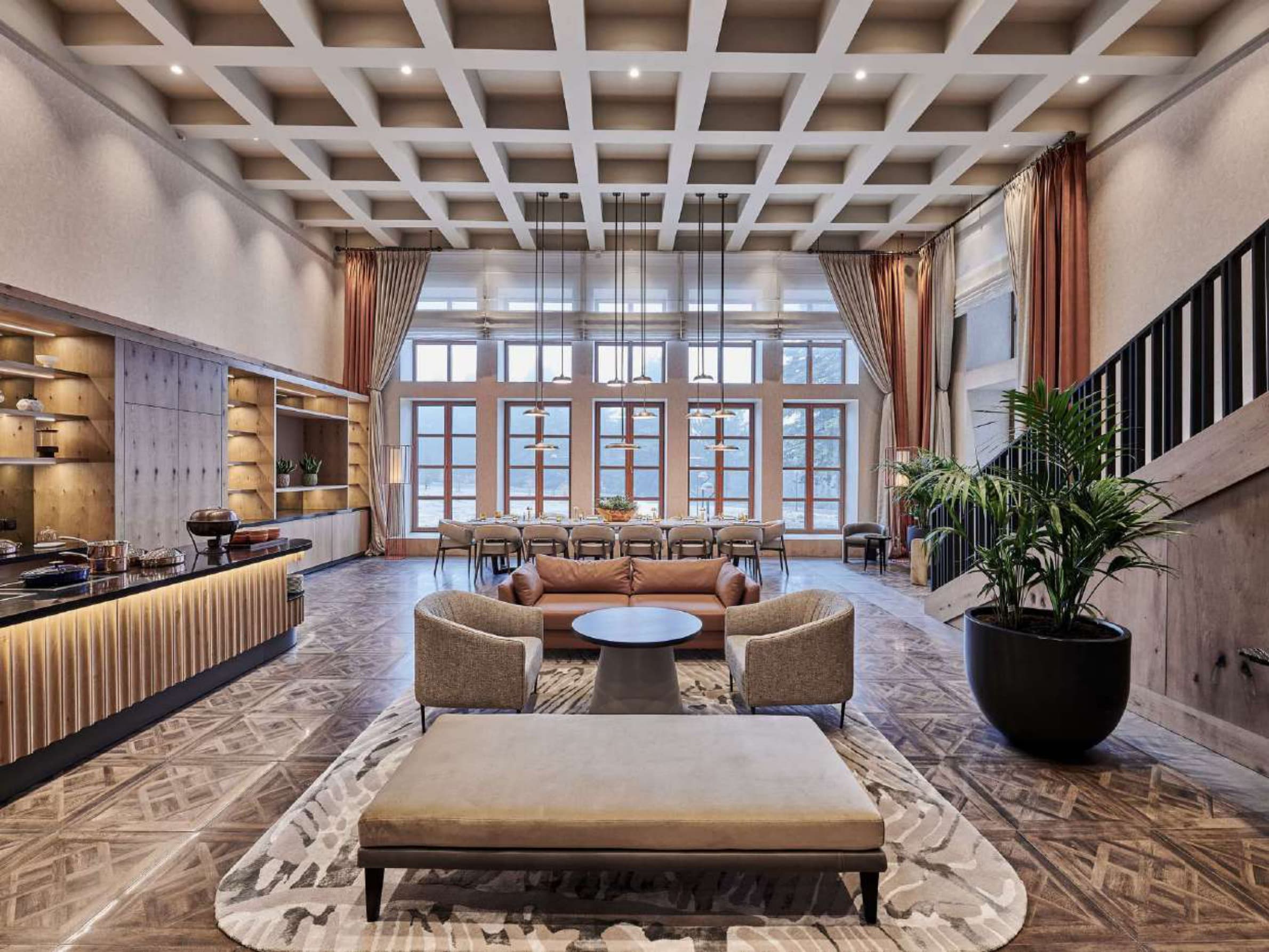
What to evaluate — durability, fire-safety standards, lead times — when sourcing furniture for guest rooms, lobbies, and common areas, step by step.
Why hotel furniture needs a different evaluation
Hotel furniture faces far heavier use than residential furniture. A guest room chair sees continuous use by different guests year-round, unlike a home chair used a few hours a day. Luggage friction, frequent cleaning chemicals, and the fast pace of check-in/check-out cycles wear furniture in ways ordinary home conditions never would.
That means selection criteria differ from residential furniture — durability, ease of maintenance, and delivery reliability matter as much as aesthetics. For a hotel operator, the wrong furniture choice isn't just a visual problem; it's the risk of having to reinvest within just a few years.
1. Material and durability
High-traffic surfaces — reception desks, bar counters, headboards — should use finishes resistant to scratching and moisture. For fabrics, check Martindale abrasion test results and favor fabrics rated above 30,000 rubs to reduce long-term replacement costs.
The thickness of veneer used on wood pieces also shouldn't be overlooked; thin veneers can start peeling at the edges within a few years. In high-traffic areas like lobbies and corridors, solid wood or thick-veneered MDF lasts far longer than thin PVC-wrapped alternatives.
- Minimum 30,000 Martindale abrasion rating for fabrics
- Scratch-resistant laminate or lacquer finish on tabletops
- Waterproof surface treatment in areas exposed to moisture and steam (bathrooms, spas)
- Thick veneer or solid wood in high-traffic zones
2. Fire and safety standards
Hotel furniture must meet fire-resistance standards applicable to hospitality properties (for foam fillings and fabrics, for example). Requesting these certificates from your supplier before the project starts avoids issues later with operating licenses and insurance.
Hotels working with international chains especially should note that brand standards often require stricter fire testing than local regulations. Failing to clarify these certificates at the start of a project can lead to a batch being rejected at delivery and serious delays.
3. Lead time and production capacity
Hotel opening dates are usually fixed, and delays translate directly into lost revenue. When choosing a supplier, ask not just about price but about how many projects of similar scale they've completed and their production capacity (floor area and weekly output) to reduce delivery risk.
On a large-scale hotel project (100+ rooms), furniture needs to come off a single production line on a consistent timeline. Working with a manufacturer whose capacity is insufficient can also lead to material or color inconsistency between batches.
4. Customization and design fit
Hotel projects typically follow an interior designer's or architect's drawings. A manufacturer's ability to reproduce these drawings exactly — including prototyping and revision flexibility — is a critical criterion. Clarifying the difference between catalog products and custom design upfront avoids budget surprises.
5. Installation and on-site support
In large-scale hotel projects, on-site furniture installation requires its own expertise. Clarifying whether the manufacturer has its own installation team, and what support they offer for post-installation issues, makes the opening process smoother.
Frequently Asked Questions
How far in advance should hotel furniture be ordered? It varies by project size, but for a medium-to-large project involving custom design, starting the order process at least 4-6 months before opening leaves enough time for prototype approval and any revisions.
Is it risky to place a bulk order without seeing a sample or prototype first? Yes — especially for custom-designed pieces, getting at least one prototype approved before mass production begins prevents errors from surfacing across the entire batch.