
How contract furniture differs from residential furniture, and why choosing the right manufacturer matters so much for a commercial project. A complete guide.
What is contract furniture?
Contract furniture refers to furniture specifically designed and manufactured for commercial and institutional spaces — hotels, restaurants, offices, hospitals. The term 'contract' comes from these products typically being produced in bulk under a large-scale agreement (project) according to a standard technical specification.
The term is sometimes also referred to in the industry as 'hospitality furniture' or 'commercial furniture,' but contract furniture as a concept isn't limited to hospitality — any furniture manufactured for commercial purposes, under a contract, and bound by a technical specification falls into this category.
How it differs from residential furniture
Residential furniture is sold to individual consumers, often as single pieces or small quantities, with aesthetics as the priority. Contract furniture has additional requirements: durability under heavy use, fire and safety certifications, project-specific dimensions and color matching, consistent quality at scale, and on-time delivery.
Pricing models also differ: residential furniture has a fixed unit price, while contract furniture pricing is directly shaped by project scale, degree of customization, and delivery schedule. That's why contract furniture quotes are usually prepared specifically for each project rather than pulled from a standard price list.
- Durability testing under heavy use (abrasion, load, impact)
- Fire and safety certifications
- Project-specific dimensions, color, and material matching
- Batch-consistent quality at scale
- Bulk delivery on a committed date
Which industries use contract furniture?
Hotels (guest rooms, lobbies, restaurant areas), offices (meeting rooms, open-plan areas, reception), restaurants and cafes, healthcare facilities, educational institutions, and shopping centers are the primary users of contract furniture. Each sector has its own technical requirements — hygiene standards in healthcare, fire certificates in hospitality, for example.
What these sectors have in common is that furniture is experienced continuously and intensively by many different users. That makes contract furniture a product category that goes through far stricter testing and quality control than residential furniture.
Why choosing the right manufacturer is critical
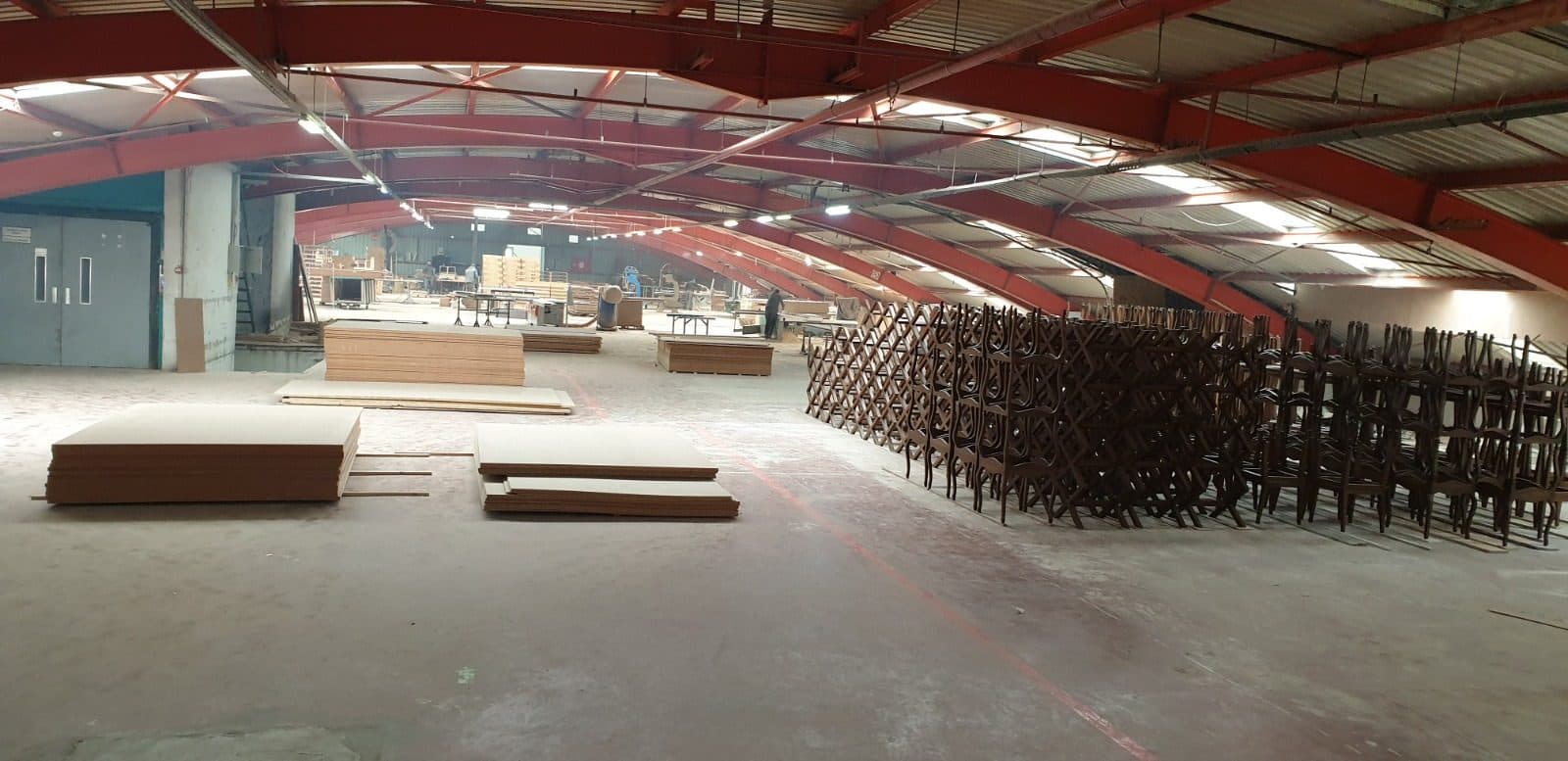
Contract furniture projects are usually high-budget and time-sensitive. Choosing the wrong manufacturer can put the entire project at risk through delivery delays, inconsistent quality, or missing certifications. Reviewing reference projects, visiting the production facility, and clarifying compliance with the technical specification before signing reduces these risks.
Frequently Asked Questions
Is contract furniture always custom-designed? No — many manufacturers also offer standard 'contract series' products; these are ready-made designs but built to higher durability standards than residential furniture.
Does it make sense for a small business (like a single cafe) to switch to contract furniture? Yes — even at small scale, heavy use causes the same wear; durability standards matter regardless of business size.