
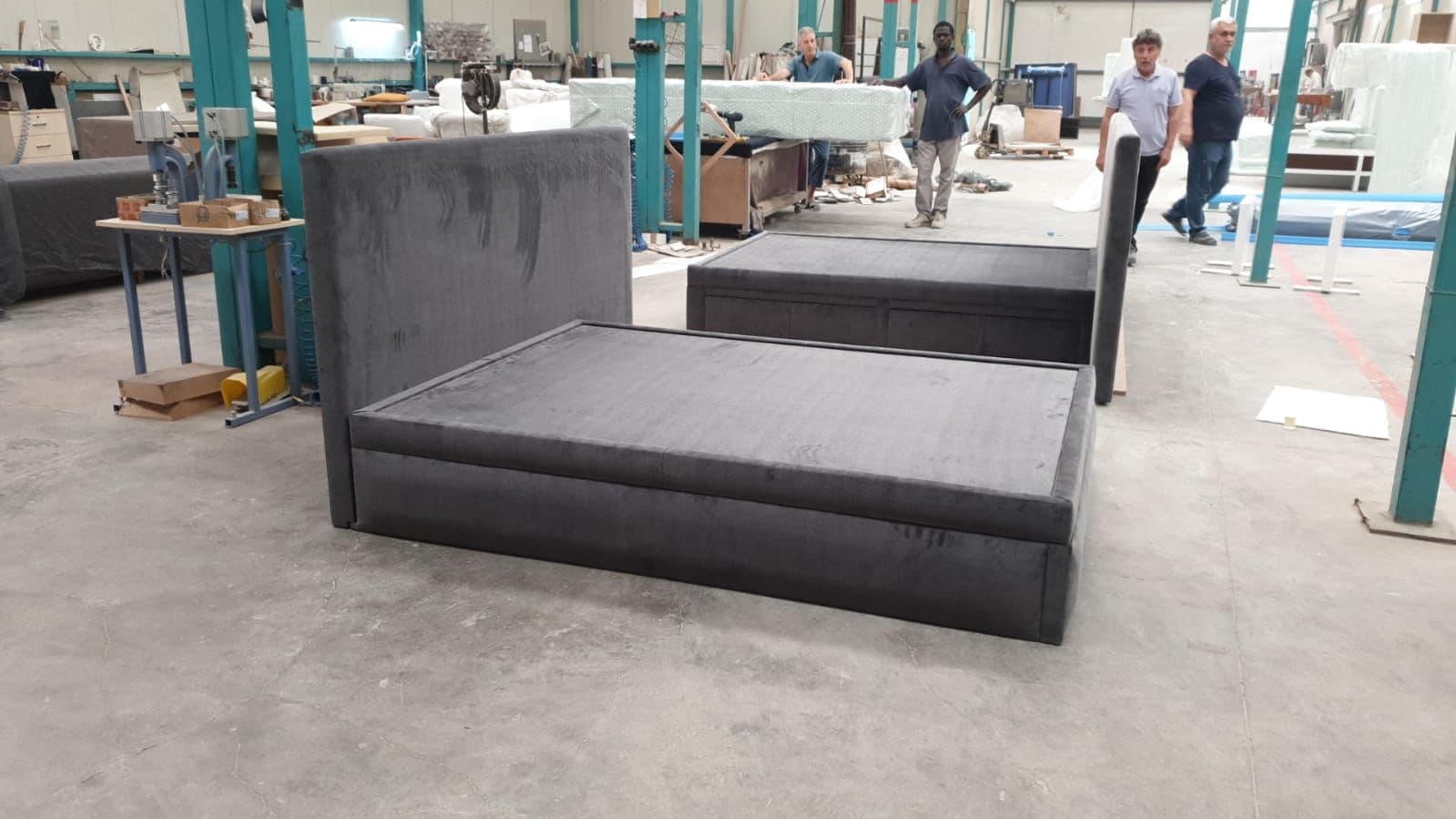
Quality control in a furniture factory isn't a single final inspection. Here's a detailed look at how checks are built into every stage of production.
Why quality control isn't a single step
A single inspection at the end of production can't prevent a bad cut or the wrong material from being used — it only catches the error late. That's why serious production facilities build quality control as multiple checkpoints spread across the entire process.
The biggest benefit of this approach is cost control: the earlier an error is caught, the cheaper it is to fix. A dimensional error spotted during cutting can be corrected in minutes, while the same error discovered on site after shipping can cause a delay lasting days.
1. Incoming material inspection
Wood, MDF, and fabric batches from suppliers are checked for moisture content, surface quality, and color consistency before entering production. Wood with high moisture content carries a risk of warping and cracking months later.
2. Dimensional checks after CNC cutting
Even though computer-controlled CNC machines like HOMAG provide high precision, each production batch is sample-checked for dimensional accuracy. This check prevents parts from not fitting together during assembly.
3. Assembly and joint strength testing
For load-bearing furniture like chairs and tables, randomly selected samples undergo load testing after assembly. Joint strength directly determines how long the product lasts in the field.
- Static load testing (weight applied to seat/table surface)
- Tightness and play check at joints
- Repeated open-close testing (drawer and door hinges)
- Stability and wobble check
4. Finish and surface final inspection
After paint, lacquer, or fabric upholstery is complete, the product is inspected under natural light for surface roughness, color uniformity, and finish thickness. Defects found at this stage are corrected before shipping.
5. Pre-shipment final check
A final check before packaging confirms that every part of the product — hardware, doors, drawers — is complete and functions correctly. This step prevents delays during on-site installation caused by missing parts.
Frequently Asked Questions
Is a quality control report shared with the client? On corporate projects, especially large batches, a summary of quality control results is usually shared along with the delivery report, meeting the client's need for transparency.
What happens if one of the checkpoints is skipped? A defect not caught at any stage has to be fixed at higher cost at the next stage, or gets noticed on site by the client — which damages brand trust.